Developing and writing a successful paragraph can be a challenging task because it requires you to carefully organize a single, complete thought into logical -- and grammatically correct -- written sentences. A paragraph can stand alone as a single thought, or it can serve as one thought in a larger composition. Regardless of its role, your paragraph will require careful planning and execution. In terms of execution, it will need a clearly defined topic sentence, several supporting examples and a conclusion.
How often have you read a book from start to finish, only to discover that you don't remember very much of the information it contained? Here’s a simple strategy to start retaining information for years to come.
None of the information below is of my own mind. I am simply supplying the content and weblinks for you from her site. PDF version available here. All credit belongs to Karen Coda.
How do I choose a topic and get started? Try choosing a major event, either in your own life or an event of historical significance. For example, The Great Depression.
This type of essay has five parts (not paragraphs!), with each part corresponding to a specific task the writer needs to perform, and each part consisting of one or more paragraphs.
Essay Part
Scope
Purpose (not all necessary for every essay)
Introduction
General
Background for the topic
Setting out the issues
Focusing the argument—the purpose of the essay
Description of the "Cause"
Begins general; becomes increasingly specific
What the specific conditions are
Specific illustrations of these conditions
How these specific illustrations are representative of (can stand in for) other situations
In this first part of the analysis, the writer needs to provide enough detail for the reader so the reader can understand the present situation. In addition, the writer needs to focus the description of the situation in such a way as to prepare for the "effect" that the writer is arguing for. For example, if the writer wants to argue that the loss of privacy has led to (or will lead to) a loss of individual freedom, then the description of how technology affects our privacy should focus on technologies that affect an individual’s freedom to act.
Description of the "Effect"
Begins general; becomes increasingly specific
What the specific effect is (or effects are)
How we get from the specific conditions to the specific effects
Specific illustrations of these effects
How these specific illustrations are representative of (can stand in for) others
In this second part of the analysis, the writer needs to walk the reader through the logical steps the writer has used to move from cause to effect. For example, if the writer argues that loss of privacy leads to loss of individual freedom, the writer needs to explain carefully how privacy and freedom are linked. So perhaps the writer might claim that privacy allows an individual to be free from the observation of others. With our privacy becoming increasingly limited by surveillance, we are no longer free from the observation of others. If we believe that we are always being watched, we will probably change our behavior and be less willing to take chances or act independently. If we feel we cannot act independently then we are no longer free.
Explanation of the meaning of the cause-and-effect relationship
More General
Why this analysis is important
How we might act upon the ideas the writer has presented
In this third part of the analysis, the writer argues for the importance of the argument’s findings, often by putting in perspective the short-term or long-term consequences of the "effect." In addition, in this part the writer usually makes some sort of recommendation (what we should do). So if the writer is arguing that loss of privacy leads to loss of freedom, in this part the writer might speculate one what might happen if this trend towards further loss of privacy continues. In addition, the writer might describe some of the specific actions we can take to safeguard our existing privacy, or how legislation might provide such safeguards.
Conclusion
General
Summing up
How our understanding of the larger issue might be changed by the writer's analysis
Appeal to the reader—how this situation affects us
To write a cause and effect essay, you’ll need to determine a scenario in which one action or event caused certain effects to occur. Then, explain what took place and why! This essay allows us to identify patterns and explain why things turned out the way that they did.
Not all essays follow a 5-paragraph structure. Cause and Effect Essays are an example where this is the case.
It is important to understand that the five-paragraph essay is not necessarily bad. [It is simply a starting point for young writers.] However, most student writers are led to believe or rather, falsely believe, that all essays must follow the five-paragraph essay format. Just a little thought makes clear that format is very limiting and limited and does not provide an adequate organization for many types of writing assignments, especially at the higher academic levels. Always think about the purpose and scope of your essay, so that you won't make the mistake of thinking that a 5-paragraph structure is the best way to organize your essays. Instead, student writers should see that the form of an essay (its organization) needs to match the purpose of the essay.
Explaining Cause and Effect
Often writers are asked to explain how certain conditions or events are related to the occurrence of other conditions or events. When a writer argues that "one thing leads to another," he or she is making a cause-and-effect argument. For example, in an Economics class, students might be asked to explain the impact of increasing oil prices on the nation’s economy. Inherent in the question is the assumption that increasing oil prices is a cause, which produces specific effects in the rest of the economy. So, higher oil prices produce higher gasoline prices raising the cost of shipping goods. Higher oil prices produce higher jet fuel costs raising the cost of travel, and so on. "Higher oil prices" is the cause, and increased shipping costs and travel expenses are among the effects. Writing tasks involving cause and effect analysis usually take one of two forms:
1.explaining how a known cause produces specific effects. This type of analysis is what the Essay 3 topic requires.
2.explaining how specific effects are produced by a previously unknown cause (which the writer has discovered). This type of analysis is commonly referred to as root-cause analysis.
To argue that certain conditions will lead to other conditions (that the loss of privacy will lead to something else or that social media will have a profound impact with detrimental ramifications), first the writer needs to define clearly what those conditions are, and then the writer needs to make clear how those conditions lead to other conditions. Finally, the writer needs to explain what this cause-and-effect relationship means.
This type of essay, then, has five parts (not paragraphs!), with each part corresponding to a specific task the writer needs to perform, and each part consisting of one or more paragraphs.
As the class starts, you could be wondering, “What is she going to expect me to write?” Well, the beginning of this document contains basics to help you get a general feel for the writing that will be acceptable in our class, and the rest of this handout will explain more elaborately the details associated with writing in a persuasive, academic-style while arguing a point.
Learning from the Experts
I remember my years in college where I mistakenly believed that my professors had to allow me open-creativity while completing my assignments. After all, I was an adult, now. I was led to believe that after high school, I would get to begin making my own choices in life: whether positive or negative. However, this did not happen in my college classes, nor did it occur in the ‘jobs’ that I worked to help pay for my studies. Each professor—no matter the discipline of the course—had a specific requirement that I had to follow. Whether it was the precise set-up of my Chemistry lab reports, the required step-by-step showing of my equation solutions in Calculus, or the seemingly restrictive structure of my essays in Studies in Medieval Literature, I was certain that I knew how to organize, sort, and present my information better than they did.
Looking back, I now know that they were correct. Each professor—whether I liked or personally related to him or her—had insights that I did not. Each professor had experience in his/her field-of-study and knew best how to most productively succeed in it. It only took me my first year of college-level studies to realize that the structure and organization touted by each of these professors in their given fields were the most logical and useful way of proceeding. While I did not always agree with their personal views, one thing I could not dispute was that they all knew how to be methodical in their fields.
I retell this so that you can hopefully learn more quickly than I did to respect the experience of professors. While you may not always like their approach, beliefs, or views of the world, their experience in their fields are valuable. Once you have learned from them—throughout your years of study—you have the option of stepping out of that ‘box’ of organized, prescribed structure and venturing out on your own. However, while within the confines of the academic society, you will want to follow the pattern of presentation pre-set by your field. In our case, this is writing. There are basic standards for writing in English. While your content may be subjectively reflected upon at times, the structure of your writing is objectively scored based on whether you have followed the pre-set conventions that best work to order ideas in a predictable and informative way. Please review the organizational structure below and know that there is a method to my (writing) madness. There is a reason that I want you to follow a specific order in your writing. It is not so that I can have control over you. I want you to follow this order so that YOU can have CONTROL over your presentation of material and CONTROL over the way you lead your reader through your argument. I believe you will find ease and comfort in this structure once you use it effectively. Try to respect the experience of those whom you have gone to for education and guidance.
Use an inductive organizational structure to surprise readers or to address controversial topics.
While writers are under increasing pressure to organize information deductively, they can--and do--write inductively. Typically, writers employ a more inductive style when the topic is controversial or when they wish to surprise readers.
Controversial Issues
When writing documents that address controversial issues or matters that threaten the beliefs of their readers, writers may find it strategic to place their arguments in their conclusions rather than their introductions.
Surprise Readers
Readers of novels expect to be delighted with surprise endings. In contrast, readers of nonfiction don't expect the surprise ending, so they can be especially appreciative of a carefully constructed surprise. Note below, for example, the way Dianne Lynch surprises you with the line, "you are using the Internet to fight back"--a line in direct juxtaposition to the first 122 words of her short essay "Afghan Women Reach Out Via the Web."
You can't laugh or talk aloud in public, and even your shoes must make no sound. Wearing cosmetics or showing your ankles is punishable by whipping; women have had their fingers amputated for wearing nail polish.
You paint the windows of your house black so you cannot be seen from the outside. You are forbidden from walking on your balcony or in your backyard. It has been years since the sun shone on your face. And all public references to you have disappeared.
You are a woman in Afghanistan today, living under the regime of the Islamic fundamentalist Taliban.
And if you are one of the nearly 2,000 women who belong to The Revolutionary Association of the Women of Afghanistan, or RAWA, you are using the Internet to fight back.
When writing essays for school contexts, be sure to check whether your instructor will permit an inductive organization. While an inductive approach can be an effective strategic approach, some readers--particularly in academic and business contexts--define "good writing" as writing that follows a deductive structure.
For students of ENGL101, you will only use source materials in an introduction paragraph if it serves as your 'hook' line of the paragraph: the very first line. Other than that line, there should be no other source content in an Introduction paragraph. Furthermore, the last sentence of the Introduction will hold the Thesis statement that guides the readers regarding the overall purpose of the writing. A Thesis is in your own words.
Provide thesis and forecasting statements in the introduction to help busy readers focus.
Approximately 100,000 books and millions of journal articles are published each year in the United States (see Bowker Annual). Digital Archivists estimate the size of the Deep Web at over 7.5 billion documents. The Internet Archive has archived 10 billion pages of the Open Web--over 100 terabytes of information. Now that the Internet has made it possible for just about anyone to publish and potentially reach millions of readers, we are truly overwhelmed by information.
Hook Your Readers - Get to the Point!
Accordingly, writers are under increasing pressure to get to the point, to grab the prospective reader's attention and deliver the goods. In many writing contexts, across genres, readers expect writers to define the purpose, organization, and significance of a document in a thesis statement that is provided in the introduction. As a result, most documents follow a deductive organization in which the authors make a general statement and then support it with specific examples. In other words, writers summarize their thesis and often forecast how they've organized a document. Here, for example, is a headline from today's newspaper:
"Self-Amputation. Frustrated Man Plans to Cut Off His Legs Online" by Paul Eng (ABCNEWS.COM)
This headline is designed to hook readers, enticing them to read the essay. Now, in the past--that is, long ago (read after the Ice Age but before the Internet)--readers may have given writers several pages to get to the point. Nowadays, you've got seconds. Literally seconds. The time it takes to click onto something more informative or entertaining.
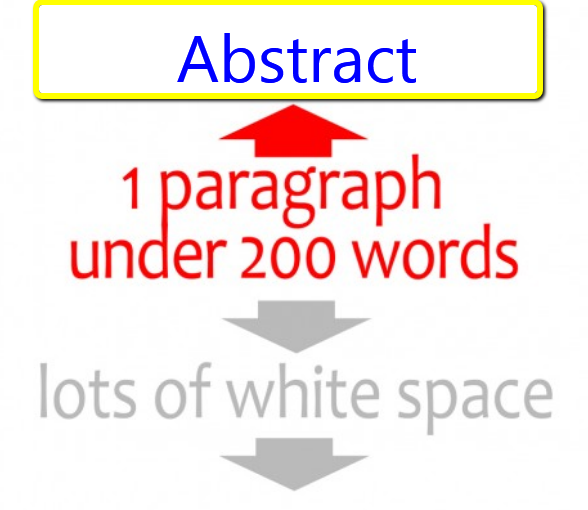
Here, for example, is an abstract of "Cybersex and Infidelity Online: Implications for Evaluation and Treatment" prepared by Kimberly S. Young, James O'Mara, and Jennifer Buchanan for the 107th annual meeting of the American Psychological Association:
Prior research has examined how marital relationships can result in separation and divorce due to Internet addiction. This paper examines how the ability to form romantic and sexual relationships over the Internet can result in marital separation and possible divorce. The ACE Model (Anonymity, Convenience, Escape) of Cybersexual Addiction provides a workable framework to help explain the underlying cyber-cultural issues increasing the risk of virtual adultery. Finally, the paper outlines specific interventions that focus on strategies for rebuilding trust after a cyberaffair, ways to improve marital communication, and finally how to educate couples on ways to continue commitment.
Here's another example of an introduction that gets right to the point, extracted from "Blinded by Junk Food":
Over indulging in fat-filled snack foods may heighten the risk of developing advanced age-related muscular degeneration, the leading cause of blindness and vision impairment in the United States for those over 55, researchers at the Massachusetts Eye and Ear Infirmary said in a new study.
By the way, you should know that readers expect you to provide deductive summaries throughout a document, particularly in lengthy documents. Each time you begin a new section, consider:
1. Providing a quick, perhaps one-sentence review of what you've discussed. 2. Explaining ways the new topic relates to what has been discussed. 3. Explaining how one section relates to another section.